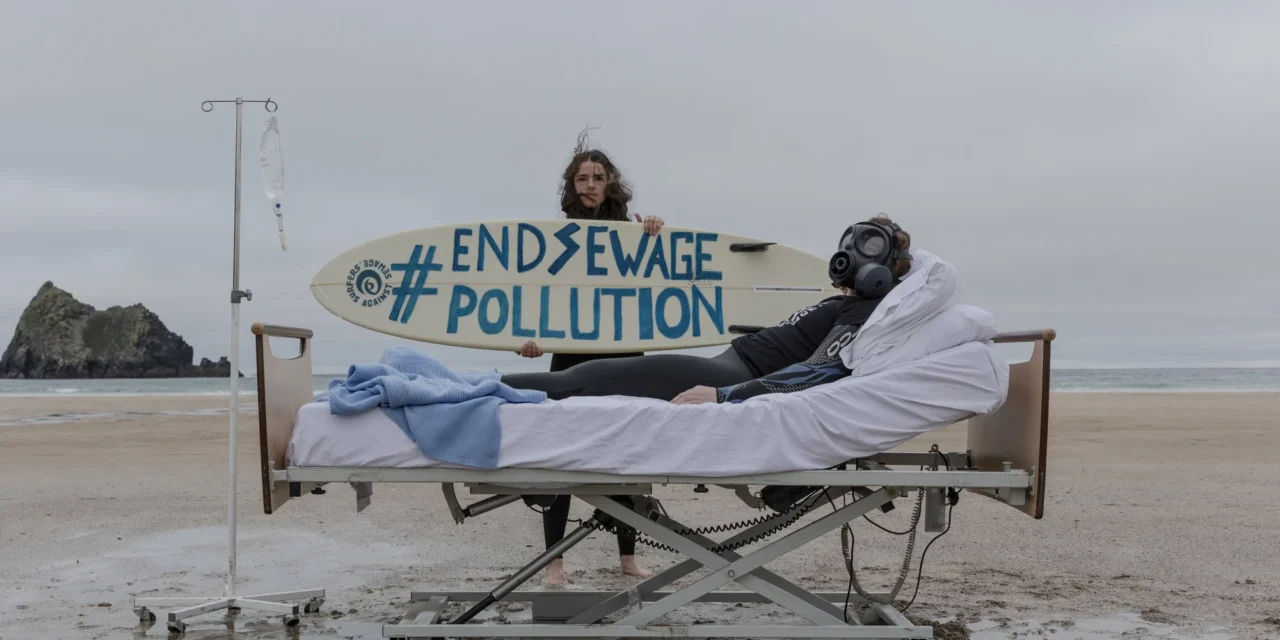
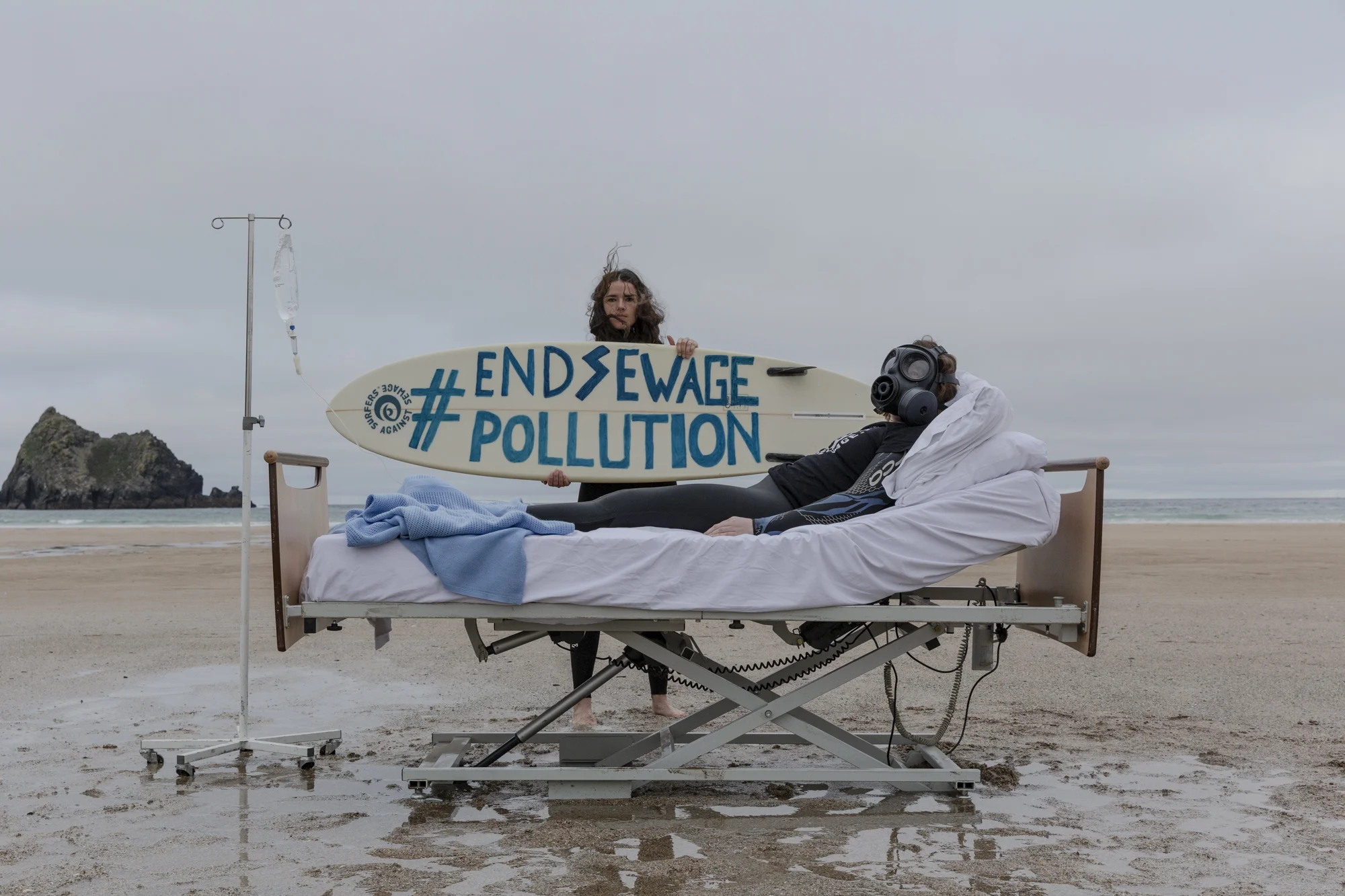
First-of-its-kind analysis by Surfers Against Sewage reveals more than 50,000 sewage discharges were reported outside the legal timeframe in first six months of the year.
England’s water companies failed to report more than 50,000 sewage discharges within the legally required timeframe in the first half of 2026, leaving the public in the dark about sewage discharges and how safe the water is. Under legislation introduced in January 2025, water companies in England must report sewage discharges within 60 minutes to ensure the public is informed when sewage is entering the water.
The 2026 Water Quality Report from campaigners Surfers Against Sewage (SAS) reveals that all nine of England’s water companies failed to meet the legal reporting requirement this year. More than 4,000 of the delayed reports across England impacted designated bathing waters, spaces officially recognised for water use and monitored by the Environment Agency (EA). Yorkshire Water was the worst offender, failing to publish discharge data in time for more than 13,000 sewage discharges across the first six months of the year.
The scale of sewage pollution is stark in the context of 2026’s extremely hot and dry summer. Water companies are only permitted to discharge sewage through storm overflows during heavy rainfall. However, freedom of information data reveals at least 70,400 hours of sewage was dumped on dry days and 7,450 ‘dry spills’ in the first 6 months of the year.
Looking back at the full picture of sewage pollution in 2025, the report highlights that sewage discharged for more than three million hours into the UK’s waters – the equivalent of 342 years of sewage pouring continuously. Sewage alerts were in place at designated UK bathing waters last year for a total of 24,771 days – meaning, on average, each bathing water had an alert in place for 37 days.
Last year, water companies in England were responsible for over 1.8 million hours of sewage discharges, an average of 5,100 hours a day. In Wales, sewage was dumped over 100,000 times, the equivalent to one spill every five minutes. While there is still limited monitoring of sewage discharges in Scotland and Northern Ireland – with just 30% of overflows in Scotland and 19% in Northern Ireland being monitored – Scottish Water and Northern Ireland Water were responsible for 100,044 and 9,496 spills in 2025 respectively.
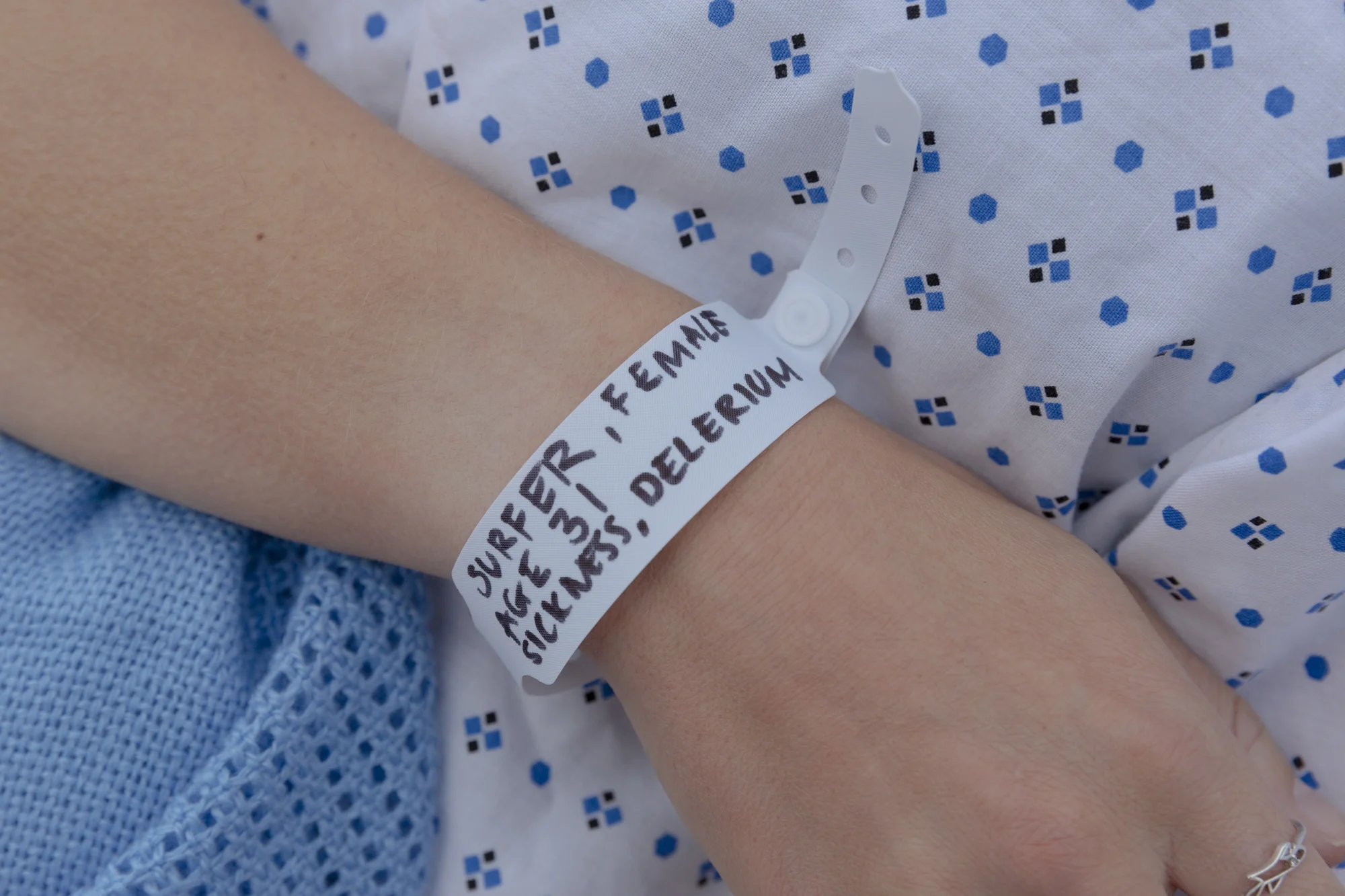
The report also highlights the human impact of poor water quality. In 2025, 1,568 sickness reports were submitted to SAS through its Safer Seas and Rivers Service app. Reported illnesses included severe bacterial infections such as E. coli and Campylobacter, gastroenteritis, ENT infections, and in extreme cases, hospitalisations and life-changing surgery.
From January to August 2026, 1,687 people have told the charity they got sick after using the water at rivers, lakes and beaches across the UK – surpassing the 2025 figure eight months into the year. Across reports submitted from January 2025 to August 2026, people reported a total of 5,222 days off work, equivalent to around 20 years of full-time working days lost. The data also reveals that during the hottest summer on record for the UK, 787 people reported getting sick after using the water across the numerous heatwaves between May and August 2026. As these figures only capture cases reported directly to the charity, they are likely to represent only a fraction of the true scale of illness experienced by water users.
Giles Bristow, CEO at Surfers Against Sewage, said: “Imagine checking for a sewage alert, heading out for a swim or a surf, and finding sewage has been pouring into the sea for hours. Your water company didn’t report it. In England, we don’t have to imagine it. We’re living it. Water companies have systemically failed to report sewage discharges on time more than 50,000 times this year. That’s a threat to public health, and it’s illegal. Yet we pay the price, through our health and our soaring bills, while water company greed and law-breaking goes unchecked.
“The Government has finally started to look seriously at who owns England’s broken water industry. But with every day it deliberates, sewage floods our seas, money flows to shareholders and people get sick. Every Paddle Out and every petition has forced the Government to act. Now we must shout louder than ever so politicians don’t waste this opportunity. We won’t ease off until our water industry is owned and run in the public interest, putting our health and wellbeing before shareholder returns.”
Last year, following a training swim for a channel crossing off the coast of Looe in Cornwall, swimming coach Loretta Cox became severely ill with an E. coli infection – despite the water quality in the place she swam being rated ‘good’ by the EA. Loretta Cox said: “Within hours of my early morning swim I had symptoms of a serious infection. After two rounds of strong antibiotics and a month of recovery, I was exhausted physically and emotionally, and it’s had a lasting impact on me. Swimming is my passion, my job, and my community. It makes me so angry we have to consider the quality of the water, and whether it’s a risk to our health, before going for a dip – just because water companies are putting profits before us. It must stop. We need better protections and water quality testing for swimmers, surfers and anyone using the water, and the Government must ensure water companies stop profiting from polluting our waters.”
In 2026, a Public Health Water Taskforce was set up by the Government to review how public health can be better integrated into water legislation. Its remit includes advising the Government on public health risks associated with recreational water use, but it is yet to release recommendations, and it’s unknown to what extent the Government will implement them.
Peter Selley, a retired doctor based in South West England, said: “Doctors and medical professionals working in coastal areas need to be alert to the risks from polluted waters as routine tests may not identify the type of germ responsible. As doctors, we see patients becoming sick after using polluted waters. So it’s remarkable there’s no coordinated response from the Government for medical professionals to follow when it comes to diagnosing, recordingand reporting sickness cases in water users. Food poisoning is a notifiable disease – it must be reported to authorities to protect public health. However, illness contracted after swimming in polluted water is not, but it’s clearly a growing threat to all our wellbeing.”
The 2026 Water Quality Report lands at a critical moment for the future of the water industry, as political and public pressure for meaningful change swells and the Government begins to look at alternative industry ownership models. SAS is calling on the Government to use the upcoming Clean Water Bill to legislate for a water industry that is owned and governed in the public interest rather than to generate profit for shareholders.
The charity is also urging the public to take part in a Mass Lobby from 22 to 26 October. Hundreds of citizens will meet their MP face-to-face to raise the issue locally, push for change, and to pressure Ministers to deliver a Clean Water Bill that resets the system, not one that keeps the status quo.
In Wales, SAS is calling for the Clean Water Bill to lay out the devolution of more powers to the Welsh Government on water quality and its regulation and urges the Senedd to use all of its powers to tackle sewage pollution across the nation. In Scotland and Northern Ireland, where water companies are publicly owned, SAS is demanding in its Devolved Manifestos that both Governments commit to specific legislation to tackle the issue, as well as prioritising the delivery of 100% monitoring across sewage networks.