Falmouth Docks Dredging: What the £150m Redevelopment Means for the Fal Estuary
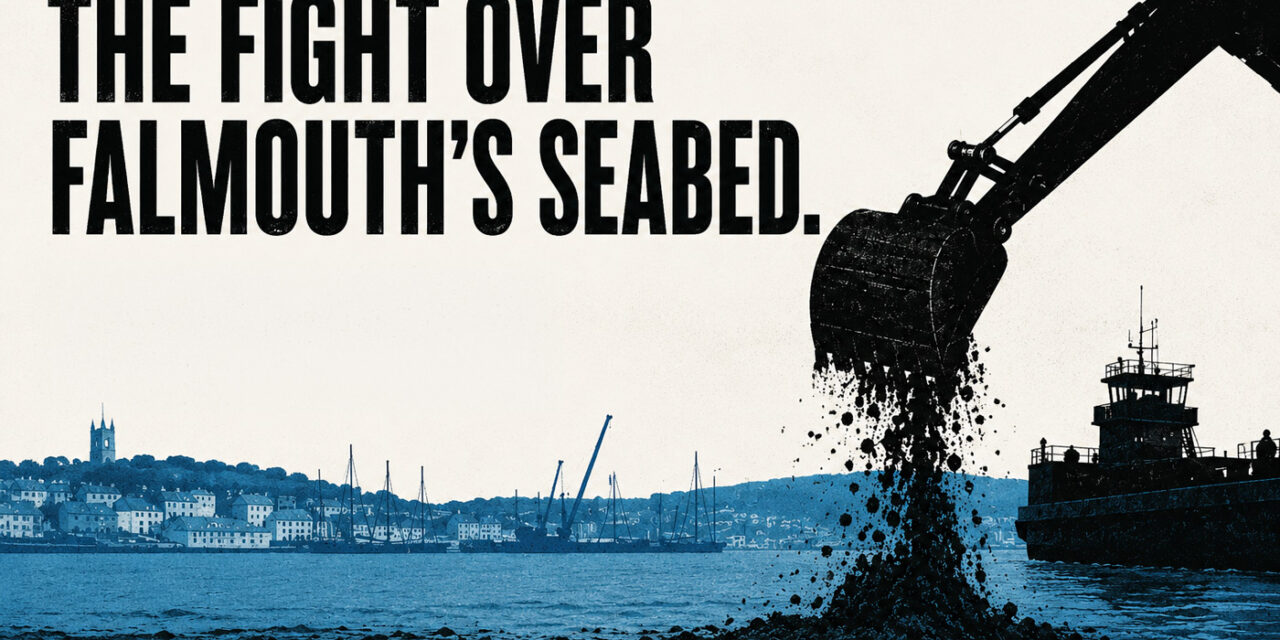
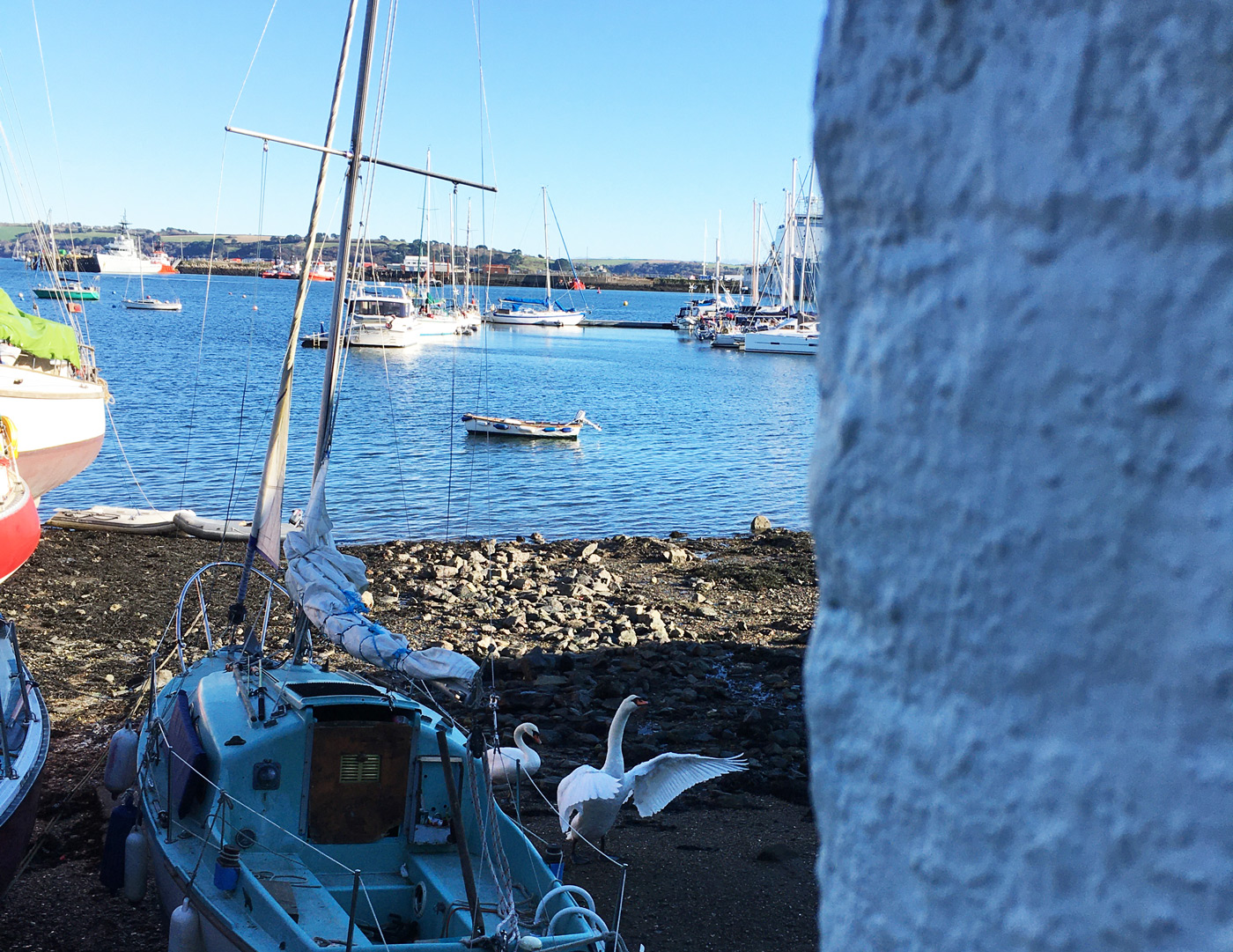
Cornwall’s biggest port town is arguing about mud. On 20 August, Cornwall Council’s strategic planning committee considers the £150 million Falmouth Docks redevelopment, the largest scheme the town has seen in eighty years. The plans would deepen the harbour so far larger vessels, cruise ships among them, can come alongside. Getting there means dredging roughly 643,000 cubic metres of sediment out of the Fal Estuary and disposing of most of it at sea.
What the dredging involves
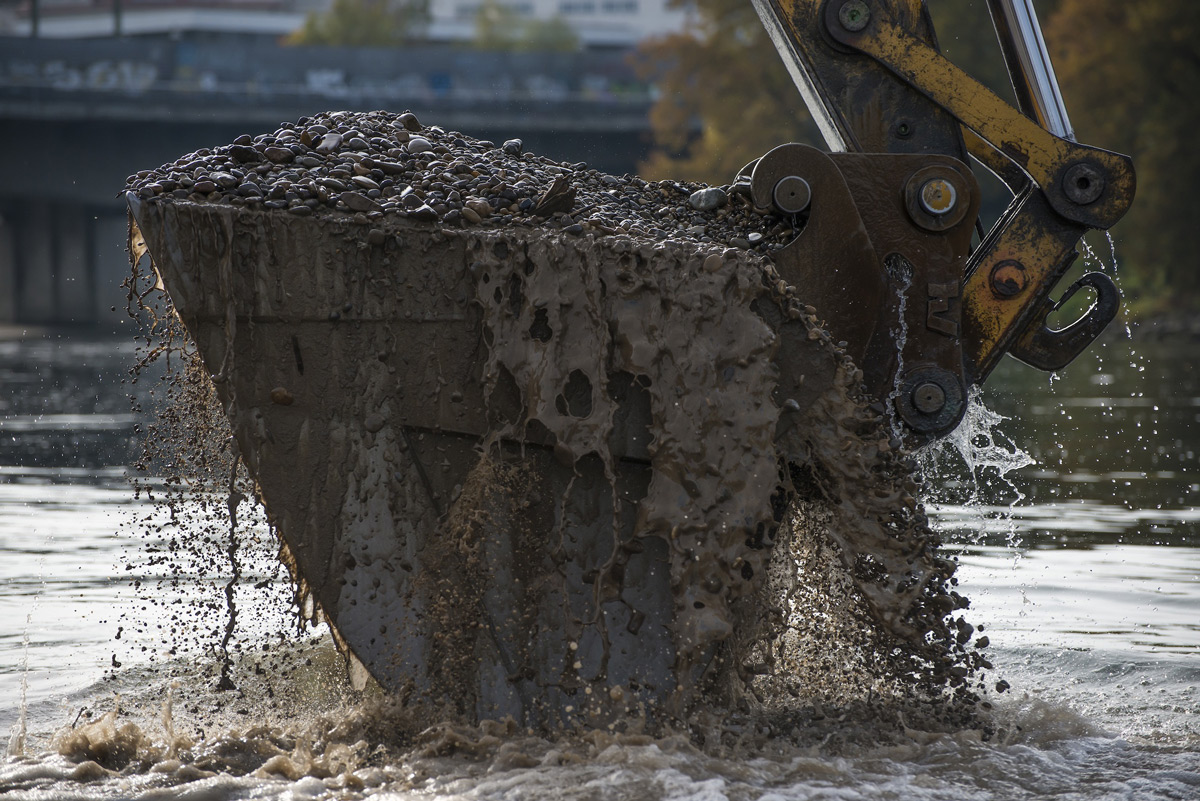
The proposed dredge area covers around 232,500 square metres of seabed, roughly 23 hectares, and twenty-one sediment cores have been analysed across it. Cornwall Wildlife Trust reports that mercury, lead, zinc, copper and tributyl tin turned up in three quarters of those cores, at concentrations it believes could rule the material out for tipping offshore. Dan Barrios-O’Neill, the Trust’s head of marine conservation, argues the survey is simply too coarse to separate contaminated ground from clean ground with any confidence. A century and a half of ship repair and naval use leaves things in the mud. The Trust has lodged a holding objection asking for more evidence, and has stated it does not oppose the redevelopment itself.
Why the Fal Estuary is protected
The lower estuary forms part of the Fal and Helford Special Area of Conservation, one of the most significant marine protected areas on the Cornish coast. The seabed there holds maerl, a slow-growing calcified seaweed that builds loose gravel-like beds over thousands of years. Maerl in the Fal Estuary acts as a nursery for scallops, crabs and other commercial stocks, which is why Cornwall’s fishing fleet has a direct stake in the outcome. Seagrass and the native oyster fishery occupy the same water.
Who is behind the Stop the Dredge campaign
The Stop the Dredge campaign, which opposes the plans in their current form, has more than ninety members. Organiser Eve Godfrey-Styles has described a membership running from students through to business owners and fishermen, drawn together by what the dredge might do to how they make a living. Marine filmmaker Giosue Reale, who dives around Falmouth regularly, has put the same worry in personal terms, weighing what all that time in the water might mean for him alongside what it means for the creatures he films.
The case for the port
The port and dock operators say the dredge is essential. Miles Carden, chief executive of Falmouth Harbour, notes that dredging here is nothing new, since the harbour was kept deep that way for centuries before the recent gap, and that ships have grown to the point where the water has to follow if Cornwall’s marine economy is going to keep them. Balaena, which owns the site, says any work would be carried out under strict environmental controls. Drystan Jones, its director of port development, has said the intention is to modernise the docks carefully, with the town rather than around it, and to leave behind skilled work across several industries.
The scheme is broader than cruise tourism. There is a new area for assembling floating offshore wind turbines, roughly twice the freight capacity the docks handle now, and a projected £13 million a year for the local economy. Earlier versions of the plan, going back over a decade, were argued on a figure of 800 jobs.
Falmouth has been here before
A £20 million dredge was blocked in 2011 over the maerl beds. A six-month trial followed, with a surface layer of maerl lifted, put back and then monitored, after which harbour authorities said the bed had recovered inside 44 weeks. Critics countered that the trial covered a tiny footprint next to the real thing, and that nobody had resolved where all the spoil ends up once it disperses.

What Happens Next
Much of the current scheme is going through the government’s fast track planning system, with the Marine Management Organisation acting as the single lead environmental regulator rather than several bodies working in parallel. The MMO says it recognises the environmental concerns raised. Questions about who polices what ends up in coastal water are not confined to Falmouth, as Surfers Against Sewage set out in Dirty Business. More than 130 people attended a public meeting at Pendennis Community Centre.
Both sides want a working port. The disagreement is over whether the evidence gathered so far is good enough to proceed on. There is probably a middle ground, but maybe the environment isn’t worth gambling with. The marine licence application is MLA/2025/00157 with the MMO and the planning application is PA25/01598 with Cornwall Council. Both are public.